

KEY FACTS
- Up to 67 turbines
- Floating turbine foundations
- Offshore substation(s)
- Water depth approx. 59-91m
- Wind farm area 200km2
- 22km east of Orkney
- 57km north-east of Wick
- Grid connection at Banniskirk Hub, Caithness
- Landfall at Keiss Beach, Sinclair's Bay
- Generating enough electricity to power the equivalent of 1.2 million homes
What the Project Includes
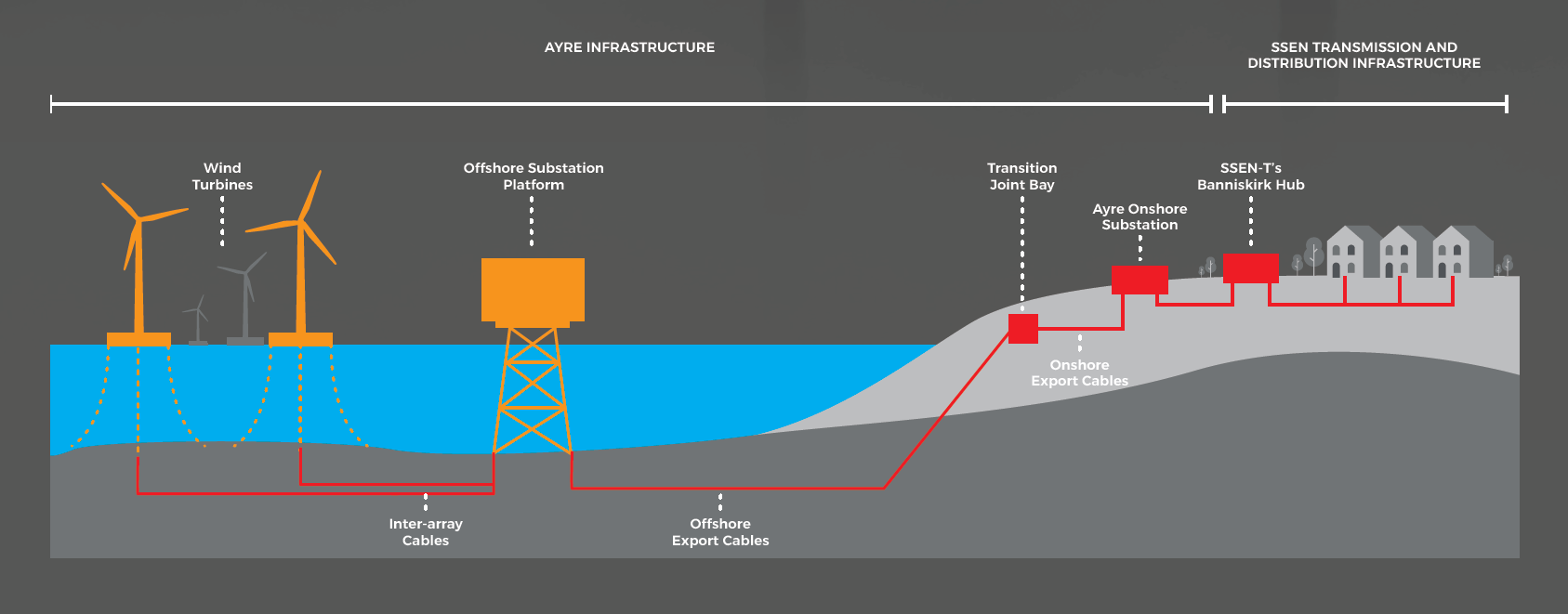
- Wind turbines
- Floating foundations, moored to the seabed
- Offshore substation(s) on fixed foundations
- Inter-array cables connecting
- Offshore export cables between the offshore substation and the landfall
- Onshore export cables, buried underground to an onshore substation
- Onshore substation where the electricity will feed into the transmmission network
Explore the Proposed Cable Route
Take a virtual journey along the proposed onshore cable route for Ayre Offshore Wind Farm. The electricity cables will be installed underground, following the proposed route shown in the flyover. Created from drone footage, this digital visualisation provides an aerial view of the route and surrounding landscape, with the red line showing the route boundary and indicative points where the cable would cross roads, the railway and watercourses.
The flyover was originally prepared to support Highland Council’s consideration of the onshore infrastructure proposals, providing a clear visual way of understanding how the proposed underground cable route relates to the existing landscape and infrastructure.
The route and crossing points shown are indicative at this stage and may be refined as detailed design, surveys and consultation progress.
Port and supply chain opportunities
The project will generate opportunities for Scottish supply chain companies, including in Orkney and Caithness, during both the construction phase, and throughout the long-term operation of the wind farm.
Construction Port
The project will be constructed from a major port in the north of Scotland. Works at the port will include assembly of turbines, integration with floating foundations, and storage of components both on land and at the quayside.
Integrated turbines will then be towed from the port to the wind farm site, moored to the seabad, and connected to the inter-array cables ahead of final commissioning.
Operations and maintenance base
A new operations and maintenance base will be located in Orkney or Caithness, generating up to 120 permanent skilled jobs. The base can be located in a smaller port or harbour than construction as fewer vessels, less quayside, and land will be required.
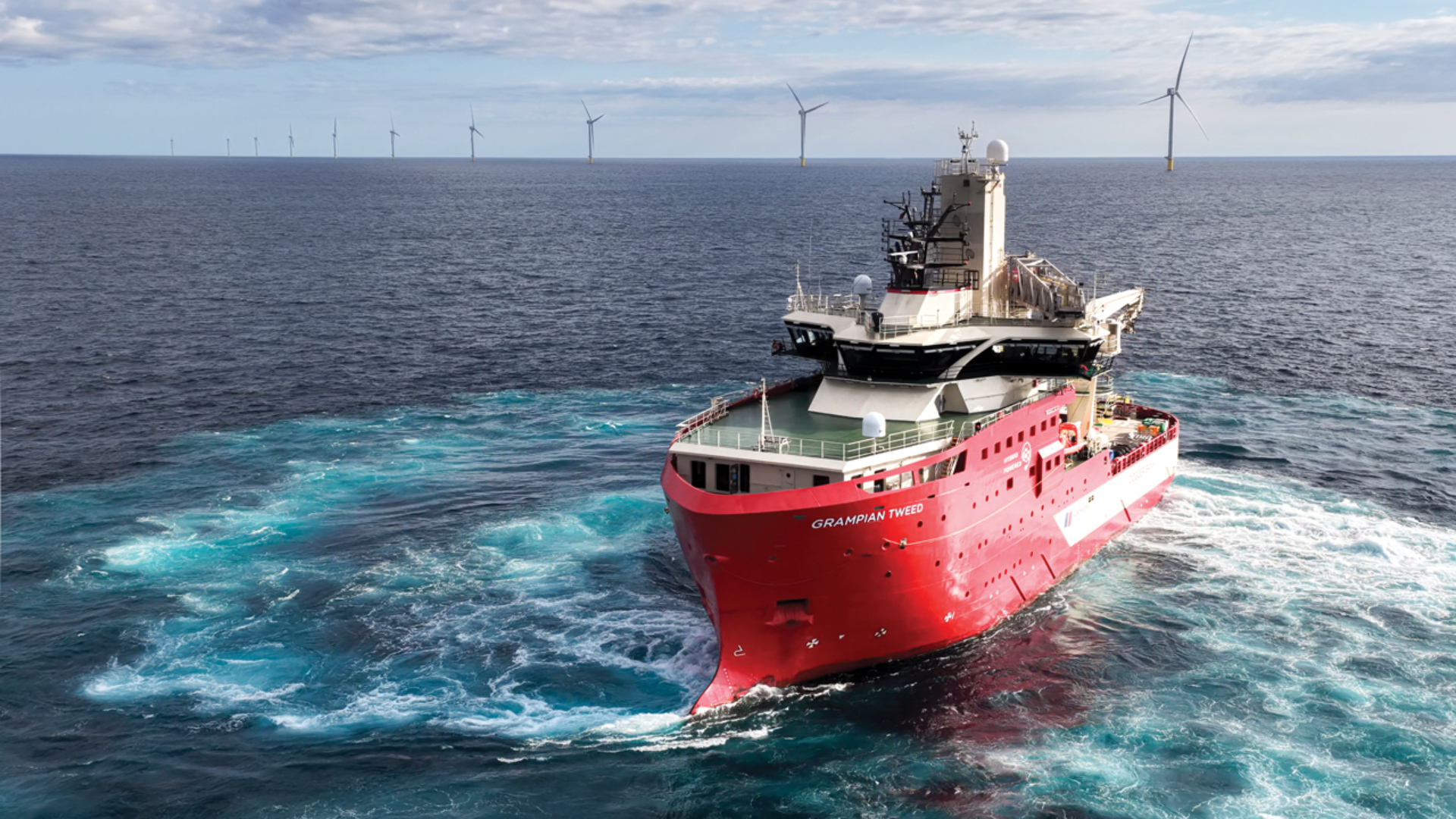
Some staff will be permanently located within the base, with others travelling to the wind farm on a regular basis to maintain the turbines, structures and electrical components. An example of a "Service Operations Vessel" is provided below.
Project Development Process
Ayre Offshore Wind Farm is currently at an early stage of development. This includes:
- Environmental and technical surveys
- Engineering design
- Stakeholder and community engagement
- Consents and Licensing
Consent Process
Onshore
Planning Permission in Principle was granted by The Highland Council for the Onshore Transmission Works in March 2026. A number of conditions were applied to the consent, information will be supplied to The Highland Council for their approval prior to construction to satisfy these conditions.
Offshore
Consent applications for the Offshore Transmission Works and Generation Assets were submitted to the Scottish Government’s Marine Directorate in late 2025 and are currently in Determination.
Operations & Maintenance Base
Consents will be sought separately in due course for the Operations and Maintenance Base. Depending on the location, this may include use of Permitted Development Rights which the harbour benefits from.
Environmental Surveys and Assessments
Baseline environmental surveys were undertaken both onshore and offshore during the process of preparing the consent application submissions. This included surveys focussing on birds, marine mammals, seabed ecology, fish and shellfish, archaeology and shipping.
An Environmental Impact Assessment and Habitat Regulations Assessment were undertaken to accompany both the onshore and offshore consent submissions. Extensive consultation was undertaken with environmental stakeholders during this assessment and will continue throughout the
consenting process.