
What are the different parts of this project, onshore and offshore? Why are there multiple applications?
An offshore wind farm is built offshore but also has cables and infrastructure onshore to connect to the National Grid. Consent is required to build and operate both the onshore and offshore elements of an offshore wind farm project. The diagram below shows the different components of the project onshore and offshore, and where the different consenting regimes apply.

Does your project require overhead lines or underground cables?
Our project will use underground cables and not overhead lines.
Will the energy be used locally?
It is not possible to say exactly where the electricity produced by our project will be used, as it will enter the National Grid and be transmitted for use by homes, businesses, and industries connected to the network which is UK-wide and demand-driven.
How large and visible will the turbines be?
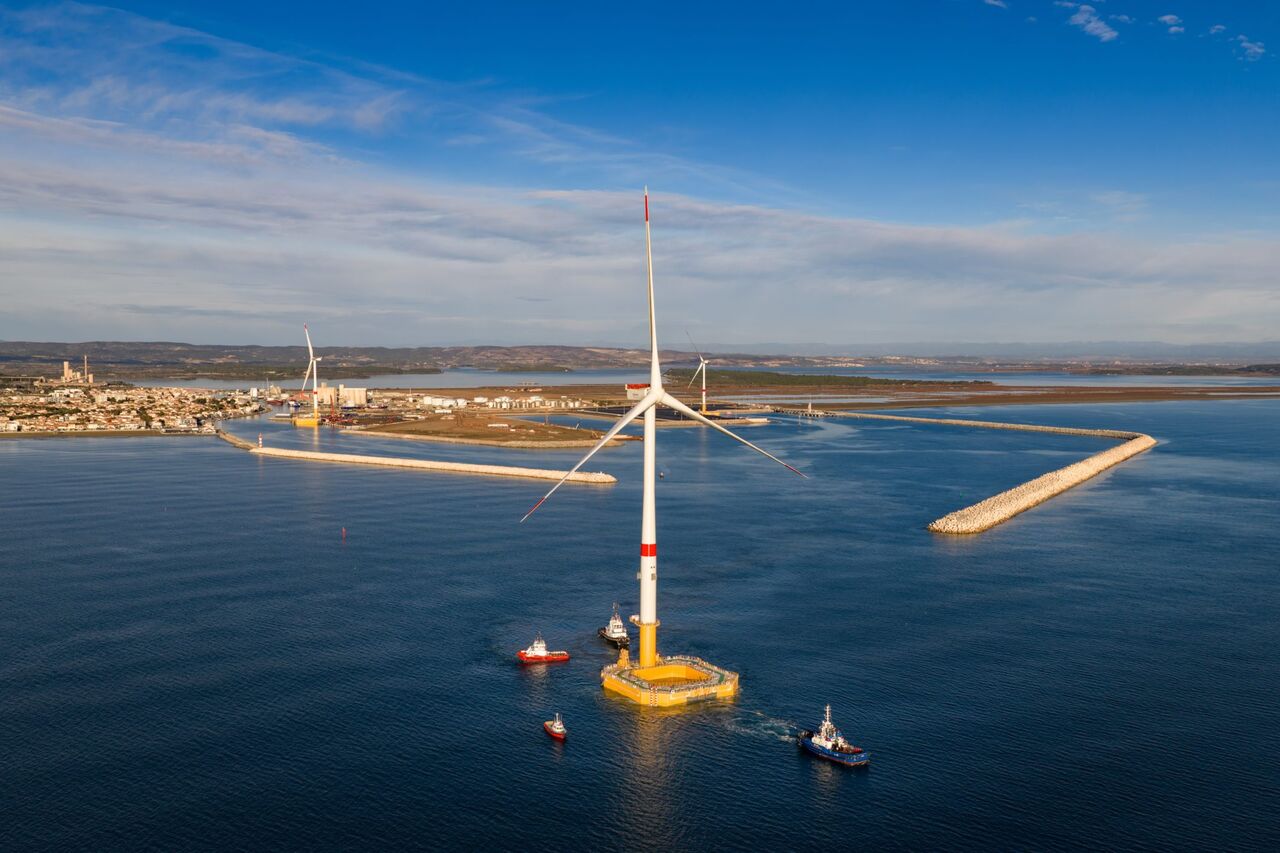
Visibility will depend on many factors such as location, time-of-day, and weather conditions, and also the size of the turbines. We have not yet selected our turbine model, however we are looking at a range of options with a maximum tip height of 356 m.
How will you manage construction traffic?
A construction phase Traffic Management Plan will be developed containing details of measures to control, monitor, and enforce heavy goods vehicles (HGVs) movements during construction. This will also include details of travel routes, holding areas, and access points to minimise the impacts of construction traffic on local residents. This Traffic Management Plan will need to be approved by The Highland Council and Transport Scotland.
To minimise the amount of traffic on the local road network during construction, a temporary haul road will be installed along the onshore cable construction corridor to provide safe access for construction vehicles, thus reducing the requirement for vehicles to travel via public highways. Temporary construction storage and laydown areas will also be used.
Any public road that will have HGVs travelling on it during construction would either already be suitable for two-way HGV movements or, be modified in advance of construction to enable this, for example by widening, or installation of passing places.
Will the beach be closed during construction?
By utilising a cable installation technique, known as horizontal directional drilling, that takes the cables underneath the beach, it is unlikely that the beach will need to close during construction. However, there may be short periods when access needs to be restricted due to specific activity that requires people to remain clear for safety reasons, for example, if the cable installation vessel is close to shore and requires a clearance zone. The timing of any closures would be arranged and publicised in liaison with The Highland Council.
Will footpaths be closed during construction?
Footpath and Right of Way closures will be avoided where possible. Where closures are required, suitable temporary diversions will be created for the duration of work in that area. A full list of temporary diversions will be agreed with The Highland Council in advance, and information on the duration and routes will be publicised.
What happens once the construction works are complete?
The cable corridor will be reinstated and handed back to the landowner with a wayleave/easement retained for maintenance purposes. This would include the removal of haul roads, reinstatement of drainage, topsoil, and vegetation, and removal of any temporary fencing and access arrangements.
Following reinstatement, the cable corridor can be used for farming crops and/or grazing animals. However, it will not be possible to locate any type of development like buildings, or to plant deep-rooted plants or trees on the land above the corridor. This is to ensure the safety and integrity of the cables, and allow maintenance to be performed if required. Manholes required for access to cable jointing locations will be marked and protected using low-level fencing. Cable marker posts will also be installed.